Playing at Luckyvibe Casino from New Zealand: What You Need to Know
An educational review of Luckyvibe Casino — an offshore platform popular with Kiwi players for pokies, table games and live dealer content. Understand bonuses, banking and safety before you sign up.
🎁 Register now — Welcome Bonus + Free Spins
About Luckyvibe Casino
luckyvibe Casino is an offshore online gambling platform that has become a talking point among Kiwi players searching for pokies, table games and live dealer content outside New Zealand's borders. Like the vast majority of sites currently accessible to New Zealanders, luckyvibe operates under a foreign gambling licence rather than any New Zealand authorisation, because no such local licence yet exists for online casino operators. This guide explains what that means in practice, how the platform's bonuses, payments and game library work, and what Kiwi players should understand about safety, fairness and responsible play before signing up anywhere online.
This article is written as an educational review rather than a promotional piece. It does not claim luckyvibe is "licensed in New Zealand" — nothing is, yet — and it does not promise winnings of any kind. Instead, it aims to help New Zealand readers make an informed decision by explaining the regulatory backdrop, the mechanics of the games on offer, and the practical realities of banking, support and self-management tools at an offshore operator.
Bonuses & Promotions
Welcome Match + Free Spins
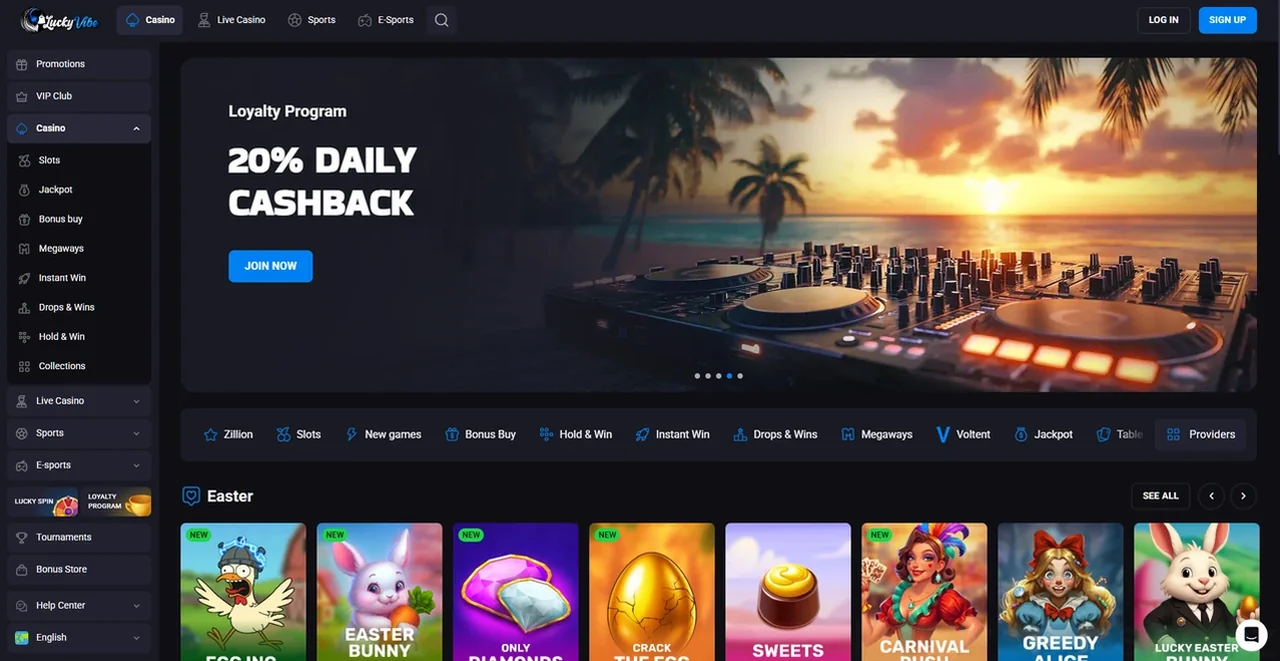
Bonus offers are one of the first things Kiwi players notice when browsing luckyvibe Casino or any comparable offshore platform. Welcome packages, free spins on popular pokies, and ongoing reload offers are standard marketing tools used to attract new depositors and retain existing ones. Understanding how these promotions are structured — rather than simply how large the headline number looks — is essential to assessing their real value.
A typical welcome offer at an operator like luckyvibe combines a deposit match percentage with a batch of free spins on a featured pokie title. The percentage match, the maximum bonus cap, and the wagering requirement attached to it determine how realistic it is to ever withdraw bonus-derived funds. Wagering requirements — usually expressed as a multiplier such as 35x or 40x — indicate how many times the bonus amount (or bonus plus deposit) must be played through before a withdrawal is permitted.
Typical Bonus Terms to Check
Before opting into any promotion, it is worth reading the bonus terms in full rather than relying on the promotional banner alone. Terms typically address which games contribute to wagering, how much time is allowed to clear the requirement, and whether a maximum bet limit applies while a bonus is active.
- Wagering multiplier (e.g. 35x bonus, 40x bonus+deposit) and which games count toward it
- Maximum bonus conversion or cash-out cap on free spin winnings
- Minimum deposit required to unlock the offer
- Bonus expiry window, often between 7 and 30 days
- Maximum bet size permitted while a bonus balance is active
- Game contribution rates — pokies often contribute 100%, table games far less
| Bonus type | Typical structure | Key thing to check |
|---|---|---|
| Welcome match | Percentage match up to a cap, e.g. 100% up to a set NZD-equivalent amount | Wagering requirement and time limit |
| Free spins | Fixed number of spins on a nominated pokie | Maximum withdrawal cap on winnings |
| Reload bonus | Smaller match on subsequent deposits | Frequency limits, often weekly |
| Cashback | Percentage of net losses returned over a period | Whether it is credited as cash or bonus funds |
Loyalty or VIP schemes are another common feature, rewarding frequent players with comp points, faster withdrawals or personal account management. These programmes can add genuine value for regular players, but they should never be the deciding factor in choosing a platform — fairness, payment reliability and safety features matter considerably more in the long run.
Game Library
Game variety is central to any assessment of an online casino, and luckyvibe pokies form the bulk of the platform's catalogue, as is standard across the offshore casino sector. Pokies are typically supplied by third-party software studios rather than developed in-house, meaning the quality and fairness of individual titles depend heavily on which providers a platform partners with.
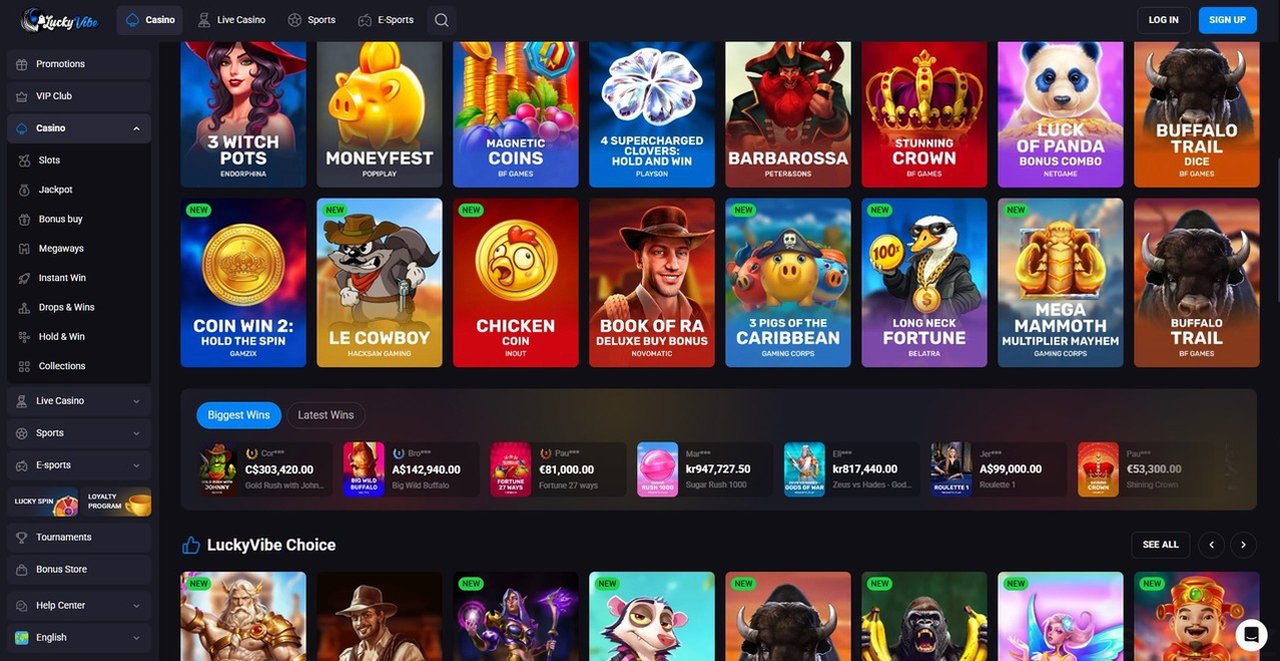
Beyond pokies, most modern offshore operators also offer table games such as blackjack, roulette and baccarat in multiple variants, alongside a live dealer section streamed from studios and staffed by real croupiers. Live dealer games appeal to players who want the atmosphere of a physical casino floor without leaving home, while RNG-based (random number generator) table games suit those who prefer faster, solitary play.
Common Pokies Providers on Offshore Platforms
Reputable software studios undergo independent testing of their random number generators and are a useful signal of overall game quality, even though provider presence alone does not constitute a New Zealand licence or guarantee of local regulation.
- Pragmatic Play — high-volatility video pokies and jackpot titles
- NetEnt — long-established studio known for branded and classic pokies
- Play'n GO — mobile-first design with a large back catalogue
- Evolution Gaming — dominant live dealer studio for blackjack, roulette and game shows
- Microgaming — one of the oldest studios, known for progressive jackpot networks
| Category | Examples | What to look for |
|---|---|---|
| Video pokies | Branded titles, cluster pays, megaways mechanics | Published RTP percentage per title |
| Progressive jackpots | Network-linked pokies with growing prize pools | Jackpot contribution rate and terms |
| Table games | Blackjack, roulette, baccarat variants | House edge disclosed per variant |
| Live dealer | Streamed tables with real dealers | Studio provider and stream quality |
Return to Player (RTP) figures, usually published in each game's information panel, indicate the theoretical percentage of wagered funds returned to players over a very large number of spins. RTP is a long-run statistical measure, not a short-term prediction, and it says nothing about the outcome of any individual session. Players comparing luckyvibe pokies to those on other platforms should check whether RTP percentages are clearly disclosed in-game, as transparency here is one marker of a well-run software catalogue.
Top games at Luckyvibe Casino
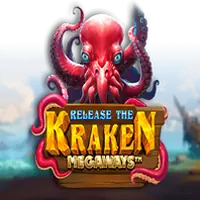
Luckyvibe Casino features popular titles like Release the Kraken and Book of Dead, offering a mix of themes and RTPs ranging from 96.21% to 96.56%. Whether you prefer classic gameplay or modern Megaways mechanics, there's variety across slots designed for different play styles.



































Audited game suppliers
Games at Luckyvibe come from certified providers including Pragmatic Play, NetEnt, and Play'n GO, all of which use independently audited RNG systems and comply with strict gaming regulations. This ensures fair outcomes and transparent game mechanics across the platform.















Banking Options
Payment flexibility is particularly important for New Zealand players, many of whom have found that mainstream bank cards are increasingly restricted or declined for offshore gambling transactions by NZ banks. As a result, e-wallets and cryptocurrency have become practical, widely used alternatives at operators like luckyvibe, offering faster processing and fewer bank-side interruptions.
Deposit and withdrawal processes at offshore platforms generally follow a similar pattern: deposits are usually instant, while withdrawals require identity verification (KYC) before the first payout and typically take anywhere from a few hours to several business days depending on the method chosen.
Payment Methods Commonly Available
While exact methods vary by operator and can change over time, the following payment types are typical of the offshore casino sector serving New Zealand players.
Cryptocurrency (Bitcoin, Ethereum, USDT) · E-wallets · Prepaid voucher cards · Bank transfer
- Cryptocurrency (Bitcoin, Ethereum, USDT and similar) — fast, often bypasses bank restrictions entirely
- E-wallets — quick processing and separation from a player's main bank account
- Prepaid voucher cards — useful for depositing without exposing card details
- Bank transfer — slower but familiar to many Kiwi players
| Method | Typical speed (deposit) | Typical speed (withdrawal) | NZD relevance |
|---|---|---|---|
| Cryptocurrency | Instant | Minutes to hours | Converted from/to NZD by player or exchange |
| E-wallets | Instant | Same day to 24 hours | May involve currency conversion fees |
| Prepaid vouchers | Instant | Not usually available for withdrawal | Bought with NZD at point of sale |
| Bank transfer | 1-3 business days | 2-5 business days | Direct NZD, subject to bank policies |
Withdrawal limits, both daily and monthly, are standard practice and exist partly as an anti-fraud measure. Players should also expect a verification step the first time they withdraw, requiring proof of identity and, in some cases, proof of address or the source of a deposit. This is a normal part of KYC (Know Your Customer) compliance rather than a sign of a problem, though delays can occur if documents are unclear or incomplete.
Because bank card transactions to offshore gambling sites can be blocked or reversed by New Zealand banks without warning, many players now treat crypto and e-wallets as the more reliable default rather than a backup option. This is a practical reality of the current offshore market rather than a recommendation to use one payment type over another.
Licensing & Safety
Licensing is the area where New Zealand players most need accurate, up-to-date information, because the regulatory landscape is actively changing. As of writing, New Zealand does not yet have any Department of Internal Affairs (DIA / Te Tari Taiwhenua)-licensed online casino operators. The Online Casino Gambling Act 2026 came into force on 1 May 2026 and creates New Zealand's first-ever licensing regime for online casino gaming, with up to 15 licences to be allocated during 2026 and issued from 1 December 2026, with the full regime becoming operational through 2027.
Until those DIA licences are issued, every online casino accessible to New Zealanders — including luckyvibe — operates offshore under a foreign gambling licence, if it holds one at all. Common offshore licensing authorities include the Malta Gaming Authority (MGA), the Curaçao Gaming Authority, and the Kahnawake Gaming Commission. These bodies impose their own standards on operators, but it is important to state plainly: a foreign licence from any of these authorities is not a New Zealand authorisation, does not mean the casino is "licensed in New Zealand," and does not bring New Zealand consumer protections or DIA oversight.
It is not a criminal offence for an individual New Zealander to play at an offshore online casino — the Act targets operators and advertisers rather than players — but this also means offshore platforms sit outside New Zealand's regulatory reach. There is no DIA complaints process, no New Zealand ombudsman, and no guaranteed local recourse if a dispute with an offshore operator cannot be resolved directly.
What Offshore Licensing Typically Covers
Foreign licensing regimes generally require operators to meet baseline standards around fairness and security, even though enforcement and consumer protection mechanisms differ significantly from what New Zealand's incoming regime will require locally.
- RNG certification — independent testing labs verify that random number generators used in pokies and table games produce statistically fair outcomes
- SSL encryption — secures data transmission between a player's device and the platform's servers
- Responsible gambling tool provision — deposit limits, self-exclusion and account closure options
- Anti-money laundering (AML) and KYC identity verification procedures
| Authority | Type | NZ authorisation status |
|---|---|---|
| DIA (New Zealand) | Domestic regulator | No online casino licences issued yet; first licences from 1 Dec 2026 |
| Malta Gaming Authority | Foreign/offshore | Not a New Zealand authorisation |
| Curaçao Gaming Authority | Foreign/offshore | Not a New Zealand authorisation |
| Kahnawake Gaming Commission | Foreign/offshore | Not a New Zealand authorisation |
Independent testing organisations such as eCOGRA and iTech Labs are frequently referenced in the industry for auditing RNG fairness and RTP accuracy on behalf of software providers and platforms. Where a casino's games carry certification from a recognised lab, this is a useful signal of technical fairness — though again, it is separate from, and not a substitute for, New Zealand licensing.
Key Facts
- Licence
- Offshore foreign gambling licence (not NZ/DIA)
- Game types
- Pokies, table games, live dealer
- Providers
- Pragmatic Play, NetEnt, Play'n GO, Evolution, Microgaming and more
- Payments
- Crypto, e-wallets, prepaid vouchers, bank transfer
- Withdrawal time
- Minutes to several business days by method
- Currency
- NZD-equivalent
- Minimum age
- 18+
Customer Support
Customer support quality varies considerably across offshore operators, and it is one of the more practical, checkable aspects of any platform before depositing. Typical support channels at platforms in this category include live chat, email ticketing, and occasionally a help centre or FAQ database covering common account and payment questions.
Response times for live chat are generally the fastest option when available, while email queries — particularly those involving verification documents or withdrawal issues — can take longer to resolve. Players should be cautious of platforms where support is difficult to reach, unresponsive for days, or unable to clearly explain bonus terms or withdrawal delays.
- Live chat availability and typical response speed
- Whether support can clearly explain wagering and bonus terms
- Presence of a searchable FAQ or help centre for self-service queries
- Language support relevant to New Zealand and Pacific players
Because no New Zealand ombudsman oversees offshore casino disputes, the quality of an operator's direct support channel becomes the primary avenue for resolving account or payment issues. This makes responsive, transparent support a meaningfully important factor rather than a minor convenience.
User Experience
Navigating luckyvibe's interface follows patterns common to most modern casino platforms: a homepage lobby organised by game category, a search or filter function for finding specific pokies titles, and an account dashboard for managing deposits, withdrawals and bonus status. Mobile responsiveness matters considerably, as a large share of Kiwi players access these platforms via smartphone browsers rather than desktop.
Load times, clarity of menu structure, and how easily a player can locate terms and conditions or support channels all contribute to overall usability. A well-organised site typically separates new releases, jackpot pokies, table games and live dealer sections clearly, reducing the friction of finding a specific game type.
- Account registration and verification flow
- Ease of navigating between pokies, table games and live dealer sections
- Mobile browser or app performance
- Clarity of bonus terms display within the promotions page
How Casino Game Mechanics Work
Understanding the mechanics behind online pokies and table games helps demystify outcomes and supports more informed play. At the core of every digital pokie is a Random Number Generator (RNG), a certified algorithm that produces unpredictable results for every spin, independent of previous outcomes. This means each spin is a discrete event — there is no "due" outcome, no hot or cold machine state, and no pattern that can be tracked or predicted across spins.
RTP (Return to Player) is a theoretical percentage calculated over millions of simulated rounds, representing the long-run average amount returned to players relative to total wagers. An RTP of 96%, for example, indicates that over a very large sample size, the game is designed to return 96% of wagered funds on average — it does not mean any individual player will experience that return in a single session, which could result in a win far above or a loss far below that average.
Volatility (sometimes called variance) describes how a pokie pays out over time — low-volatility games tend to produce smaller, more frequent wins, while high-volatility games produce larger but less frequent wins. Understanding a game's volatility profile helps players choose titles that match their bankroll and play style, though it does not change the underlying fairness of the RNG.
Independent testing laboratories play an important verification role in this ecosystem. Organisations such as iTech Labs and eCOGRA audit RNG software and RTP disclosures on behalf of studios and platforms, checking that published percentages match actual game performance under statistical testing. Where a title or platform displays certification from a recognised lab, it is a meaningful (though not exclusive) signal that the mechanics behind the game have been independently reviewed.
- RNG certification confirms statistical randomness of outcomes
- RTP is a long-run average, not a short-term guarantee
- Volatility affects win frequency and size, not overall fairness
- SSL encryption protects data in transit but is unrelated to game outcomes
Recognising these mechanics helps separate genuine understanding from common misconceptions — such as the belief that a game is "due" for a win after a losing streak, which has no basis in how RNG-driven pokies actually function.
Pros and Cons
Weighing the practical advantages and drawbacks of an offshore platform like luckyvibe helps put the earlier sections into context. None of these points should be read as a guarantee of performance or outcome — they reflect general patterns typical of the offshore casino sector.
Pros
- Wide game variety across pokies, table games and live dealer studios
- Crypto and e-wallet options that sidestep NZ bank card restrictions
- Bonus and loyalty offers available to new and existing players
Cons
- No DIA licence or New Zealand consumer protection currently applies
- Dispute resolution relies solely on the operator's own processes
- Wagering requirements can make bonus funds harder to withdraw than they first appear
- Verification delays are possible at first withdrawal
Responsible Gambling
Responsible gambling should sit at the centre of any decision to play at luckyvibe or any other online casino, offshore or otherwise. Online casino play in New Zealand is restricted to those aged 18 and over, and this age threshold applies regardless of which platform, offshore or (eventually) DIA-licensed, a person is using.
New Zealand has a free, nationwide Gambling Helpline available seven days a week on 0800 654 655, or by texting 8006, alongside further information and self-assessment tools at safergambling.org.nz. These services are confidential and available to anyone concerned about their own gambling or someone else's. In a crisis or emergency situation, call 111 immediately.
Because luckyvibe operates offshore, New Zealand does not yet have a live national self-exclusion register that covers it — that centralised register is mandated under New Zealand law to be operational by December 2027, but it is not yet available. In the meantime, players wanting to limit or stop their play should use the tools offered directly by the operator, such as deposit limits, cooling-off periods, self-exclusion and full account closure, which are typically found in account settings or requested via support.
Independent software-based blockers can add a further layer of protection beyond an operator's own tools, particularly useful for players who want a barrier that isn't tied to a single site.
- Gamban — blocks access to a wide range of gambling sites and apps across devices
- GamBlock — similar third-party blocking software for gambling site restriction
- Operator-level deposit limits, session reminders and cooling-off periods
- Full account closure requested directly through customer support
Setting a budget before playing, treating losses as the cost of entertainment rather than an investment, and taking regular breaks are simple but effective habits. If gambling stops feeling enjoyable or starts affecting finances, relationships or wellbeing, reaching out to the Gambling Helpline early is strongly encouraged rather than waiting until problems escalate.
Final Verdict
luckyvibe Casino reflects the broader offshore market that New Zealand players currently navigate: a wide pokies and table game library, multiple payment routes including crypto and e-wallets, and bonus structures that require careful reading of wagering terms. It operates under a foreign licence, not a New Zealand one, and that distinction matters — it shapes what protections and recourse are, and are not, available to players.
As New Zealand's DIA-licensed regime rolls out from December 2026 onward, players will eventually have a genuinely local, regulated alternative. Until then, informed decision-making — understanding bonus terms, checking payment practicalities, and using responsible gambling tools proactively — remains the most reliable way for Kiwi players to engage with platforms like luckyvibe.
Frequently Asked Questions
Is luckyvibe Casino licensed in New Zealand?
No. No online casino currently holds a New Zealand DIA licence, because licences under the Online Casino Gambling Act 2026 are only issued from 1 December 2026 onward. luckyvibe, like other platforms accessible to Kiwi players today, operates under a foreign licence rather than New Zealand authorisation.
Is it illegal for a New Zealander to play at luckyvibe?
It is not a criminal offence for an individual to play at an offshore casino; the current regulatory framework targets operators and advertisers rather than individual players. That said, offshore play carries no New Zealand consumer protections or DIA oversight.
What payment methods work best for NZ players?
Cryptocurrency and e-wallets are commonly favoured because they are less likely to be blocked by New Zealand banks compared with direct card transactions, though processing details vary by method and provider.
Are luckyvibe pokies fair?
Games are typically supplied by third-party studios whose RNGs may be tested by independent labs such as eCOGRA or iTech Labs, and RTP percentages should be published in-game. This indicates statistical fairness over the long run, not a prediction of individual session outcomes.
What is the minimum age to play online casino games in New Zealand?
18 years old is the minimum age for online casino play in New Zealand.
Will winnings from luckyvibe be taxed?
Recreational gambling winnings are generally not taxed in New Zealand.
What are typical wagering requirements on bonuses?
Wagering requirements are usually expressed as a multiplier such as 35x or 40x, indicating how many times the bonus amount (or bonus plus deposit) must be played through before a withdrawal is permitted. Always compare the effective wagering requirement rather than the advertised match rate alone.
How long do withdrawals take at luckyvibe?
Deposits are usually instant, while withdrawals require identity verification (KYC) before the first payout and typically take anywhere from a few hours to several business days depending on the method chosen. Cryptocurrency is generally the fastest, while bank transfers can take 2-5 business days.